 हिन्दी
  English
  العربية
  日本語
日本語  한국어
한국어  Tiếng Việt
  ไทย
ไทย  Bahasa Melayu
  فارسی
فارسی  Bahasa Indonesia
  ဗမာစာ
ဗမာစာ  简体中文
简体中文  香港中文
香港中文  繁體中文
繁體中文  Русский
  Deutsch
  Nederlands
  Italiano
  Français
  Español
  Português
  Afrikaans
  Azərbaycan dili
  Български
  ਪੰਜਾਬੀ
  اردو
اردو  বাংলা
বাংলা  Հայերեն
  Íslenska
  Қазақ тілі
  नेपाली
  Српски језик
  Kiswahili
  తెలుగు
  Basa Jawa
  தமிழ்
தமிழ்  मराठी
मराठी For many homeowners, 10kWh sounds like a full day of backup power. Sometimes it is. A home with efficient lighting, refrigeration, networking equipment, and limited air-conditioning can stay within that figure. A home that runs electric water heating, cooking, space heating, or a large air conditioner may use the same energy in only a few hours.
The useful answer depends on the load profile, not the battery label. This article shows how much energy a typical 10kWh stackable system can deliver and where the practical limit appears.
The Usable Energy Behind a 10kWh Rating
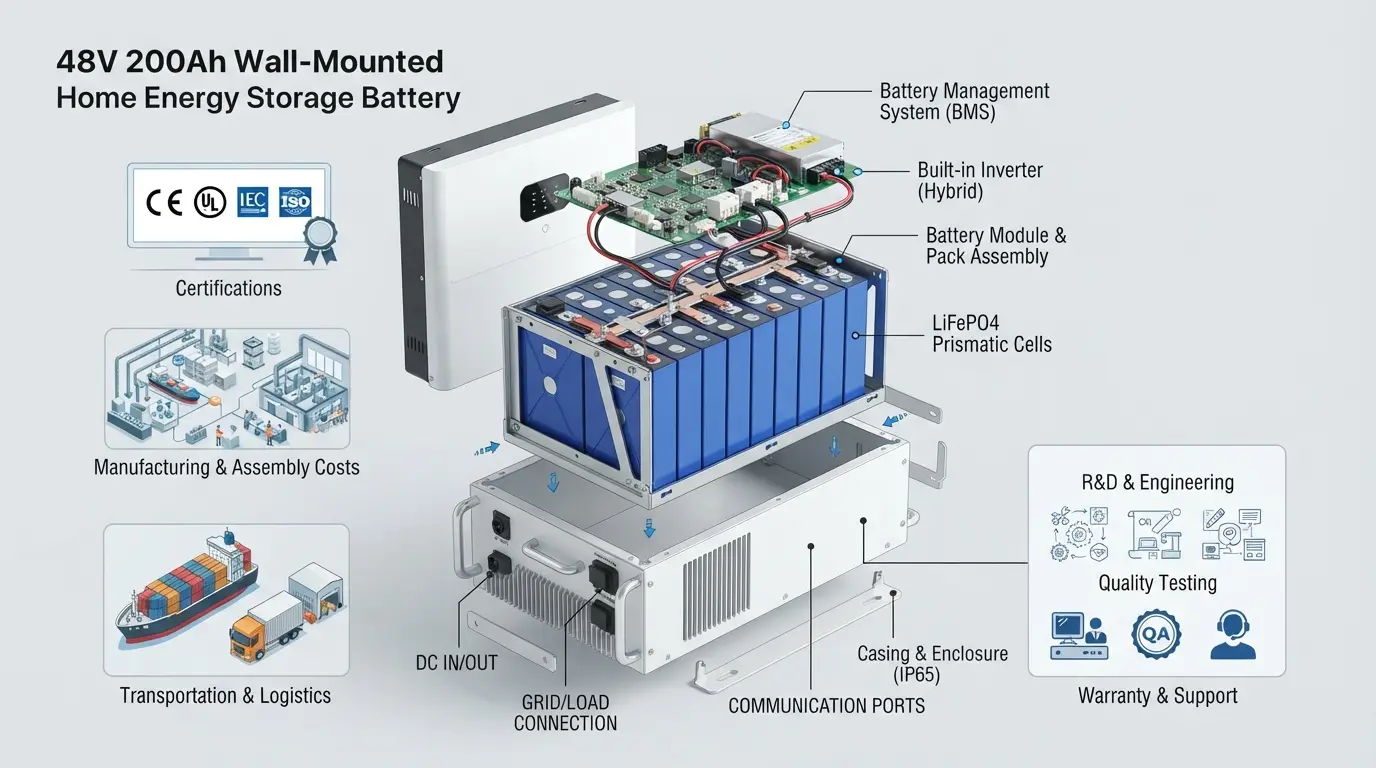
A typical system uses lithium iron phosphate (LFP) cells in a 48V battery stack. The battery may store 10kWh under laboratory conditions, but the household cannot use every watt-hour. Installers normally reserve 10% to 20% for battery protection, and the hybrid inverter loses roughly 5% to 8% while converting DC power to AC.
That leaves approximately 7.4 to 8.6kWh of usable AC energy in normal conditions. At 25°C, a well-matched LFP pack can deliver this energy at a moderate 0.5C load while maintaining a round-trip efficiency near 95% from DC to DC. The BMS also limits current, balances cell voltage, and disconnects the pack if temperatures move outside the usual 0°C to 50°C charging range.
Here is a simple daily example:
| Household load | Typical energy per day | Share of available battery energy |
|---|---|---|
| रेफ्रिजरेटर और फ्रीजर | 1.2kWh | 14% to 16% |
| Lights, router, computers, and standby loads | 2.0kWh | 23% to 27% |
| Washing machine and small appliances | 1.0kWh | 12% to 14% |
| Efficient cooking and water pumping | 2.0kWh | 23% to 27% |
| Reserve for inverter losses and peaks | 1.0kWh | 12% to 14% |
This household can usually complete a day with a 10kWh battery, especially when solar panels recharge the system during daylight. Without solar or grid charging, the same battery may not cover a second day.
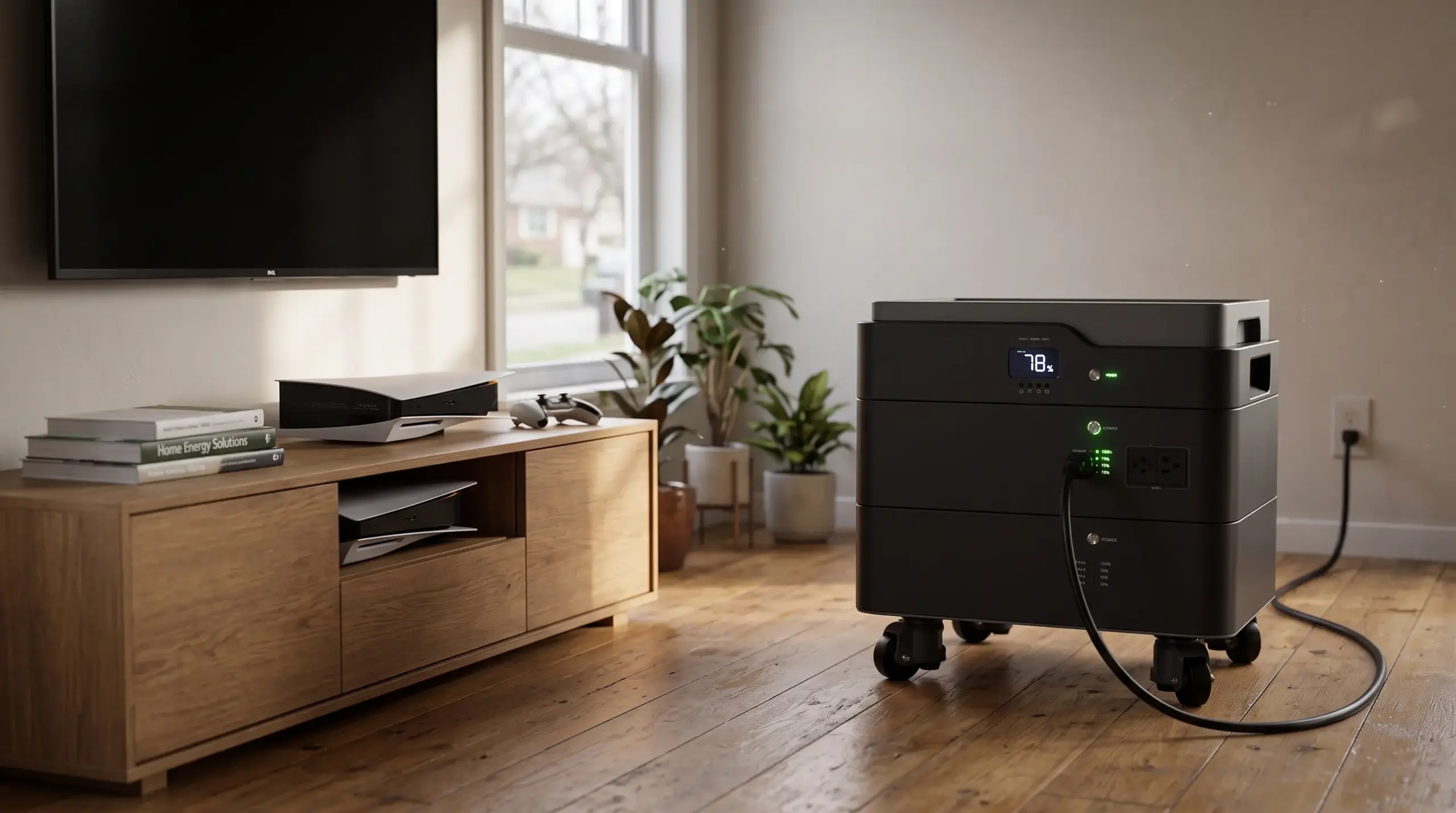
Large resistive and motor loads change the calculation quickly. A 1.5kW water heater running for two hours consumes 3kWh. A 2.5kW air conditioner running for six hours consumes about 15kWh before inverter losses, even if its compressor cycles on and off. The stack may also need a 5kW or higher inverter to handle startup and simultaneous loads.
Choosing the Right Stack for the Household
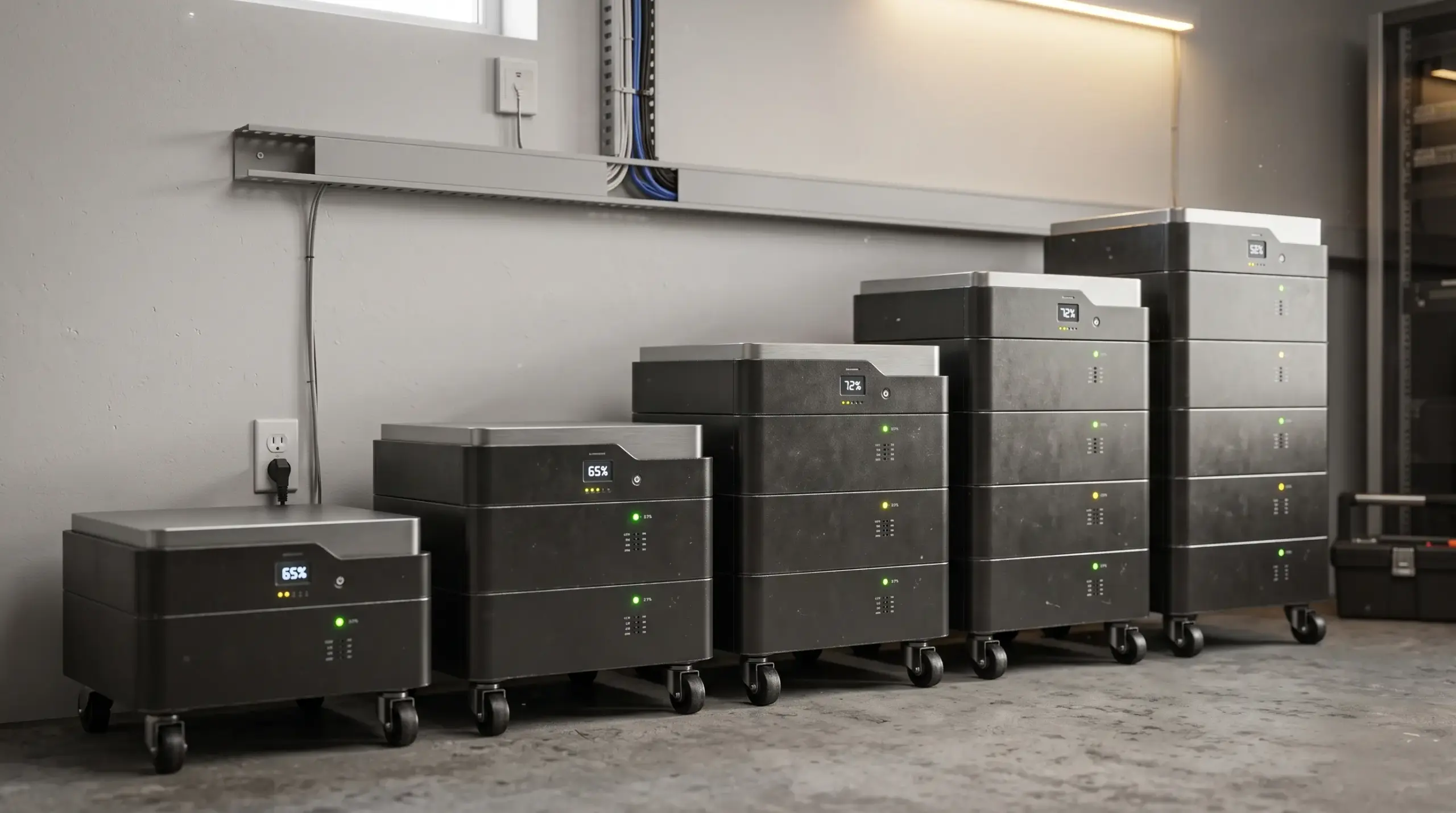
Stackable systems let an installer increase capacity by adding 2.5kWh or 5kWh modules. The right configuration depends on both daily energy and peak power.
| विन्यास | सक्त ऊर्जा | Practical AC energy | उपयुक्त उपयोग |
|---|---|---|---|
| Two 5kWh LFP modules | 10 किलोवाट घंटा | 7.4 to 8.6kWh | Essential loads for one day |
| Three 5kWh LFP modules | 15 किलोवाट घंटा | 11.1 to 12.9kWh | Essential loads plus moderate cooling |
| Four 5kWh LFP modules | 20 किलोवाट घंटा | 14.8 to 17.2kWh | Larger homes or longer outages |
Check the BMS parallel limit before adding modules. The battery should use matched firmware and communicate with the inverter through CAN or RS485. A common 48V module may support a continuous discharge current of 50A, equal to about 2.4kW at nominal voltage, with a higher short-duration peak. The inverter and battery current limits must still match; extra kWh does not automatically create extra starting power.
Four Common Sizing Pitfalls
- Counting nominal energy as usable energy – Apply the chosen depth of discharge and inverter efficiency before comparing the battery with the daily meter reading.
- Ignoring peak demand – Refrigerators, pumps, and compressors can start together. Check the inverter surge rating and the BMS discharge limit.
- Expecting solar recharge in poor weather – A 10kWh battery may need 2.5 to 3kW of usable solar generation, depending on local sun hours and daytime loads.
- Mixing incompatible modules – Do not parallel batteries with different ages, firmware, or state of health unless the manufacturer approves the combination.
OEM and ODM Considerations for Stackable Systems
For distributors and installers, the stack format also affects product support. An cURL Too many subrequests by single Worker invocation. To configure this limit, refer to https://developers.cloudflare.com/workers/wrangler/configuration/#limits should provide the cell grade, cycle-life test conditions, BMS communication map, connector specification, and UN38.3 transport documents rather than only a headline capacity.
Ask whether the supplier can tune charge and discharge limits for your inverter brand, apply a private label, and supply regional cable or breaker variants. Sample units should be tested with the target inverter before a larger order. A clear module ID strategy also makes field replacement easier when a system contains three or four battery units.
सामान्य प्रश्न
cURL Too many subrequests by single Worker invocation. To configure this limit, refer to https://developers.cloudflare.com/workers/wrangler/configuration/#limits
A 10kWh stackable energy storage system can power a reasonably efficient home for a full day when it supplies essential loads and receives sensible solar or grid charging. Treat 7.4 to 8.6kWh as a realistic planning range for AC loads, then add capacity for cooling, electric heating, cooking, or long outages.
Send your daily kWh reading, largest appliance ratings, and preferred inverter model to an OEM supplier. They can return a preliminary battery stack, inverter, protection, and cable BOM based on the actual load profile rather than the 10kWh label alone.