 Afrikaans
  English
  العربية
  日本語
日本語  한국어
한국어  Tiếng Việt
  ไทย
ไทย  Bahasa Melayu
  فارسی
فارسی  Bahasa Indonesia
  ဗမာစာ
ဗမာစာ  简体中文
简体中文  香港中文
香港中文  繁體中文
繁體中文  Русский
  Deutsch
  Nederlands
  Italiano
  Français
  Español
  Português
  Azərbaycan dili
  Български
  ਪੰਜਾਬੀ
  हिन्दी
  اردو
اردو  বাংলা
বাংলা  Հայերեն
  Íslenska
  Қазақ тілі
  नेपाली
  Српски језик
  Kiswahili
  తెలుగు
  Basa Jawa
  தமிழ்
தமிழ்  मराठी
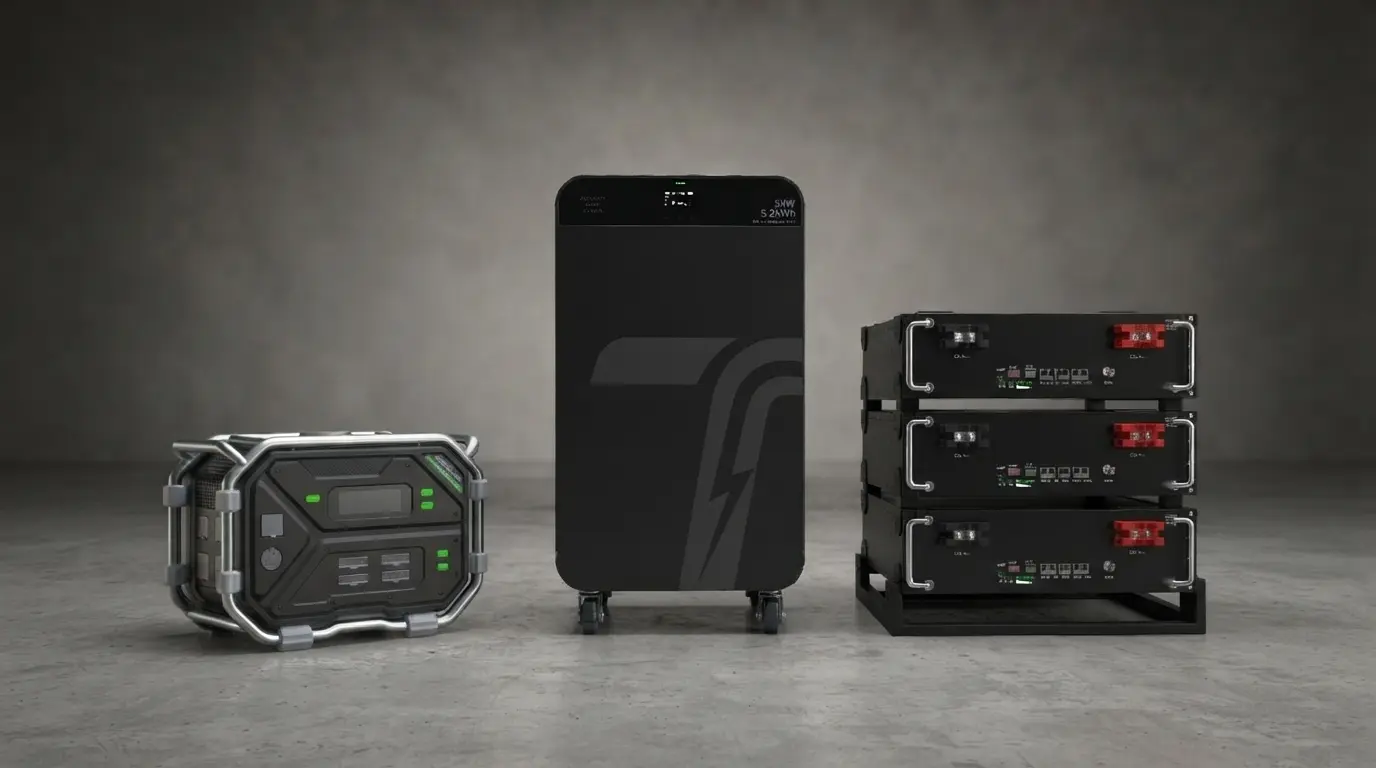
मराठी A 5kWh battery can fit the energy needs of a small apartment, but physical space is not the main question. The balcony must support the equipment, the building owner must allow it, and the electrical design must keep battery DC power separate from unsafe improvised wiring.
Vir 'n tipiese 51.2V LiFePO4 unit, 5kWh means about 98Ah of nominal capacity. A complete wall-mount or floor-standing system often weighs 50 to 65kg before adding an inverter, brackets, and cable. That makes a balcony installation possible in some buildings, but unsuitable in others.
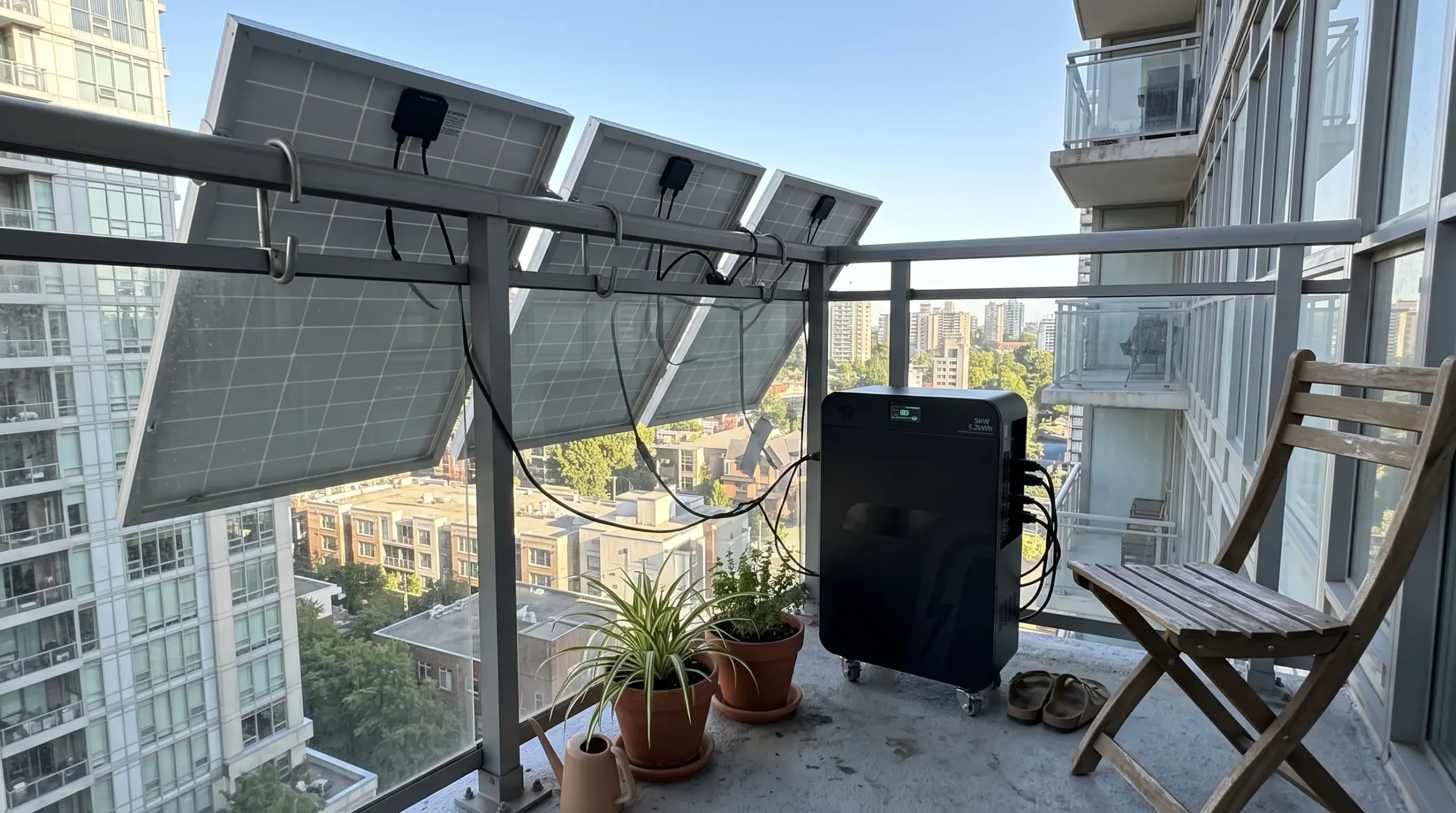
What a 5kWh Balcony System Actually Requires
Most residential systems use 16 LFP cells in series, with a nominal voltage of 51.2V and a full-charge voltage near 58.4V. A BMS monitors each cell, balances voltage, and disconnects the pack if temperature, current, or voltage leaves its permitted range. At a 2.5kW inverter load, the battery supplies roughly 49A before conversion losses, so cable sizing and terminal torque matter.
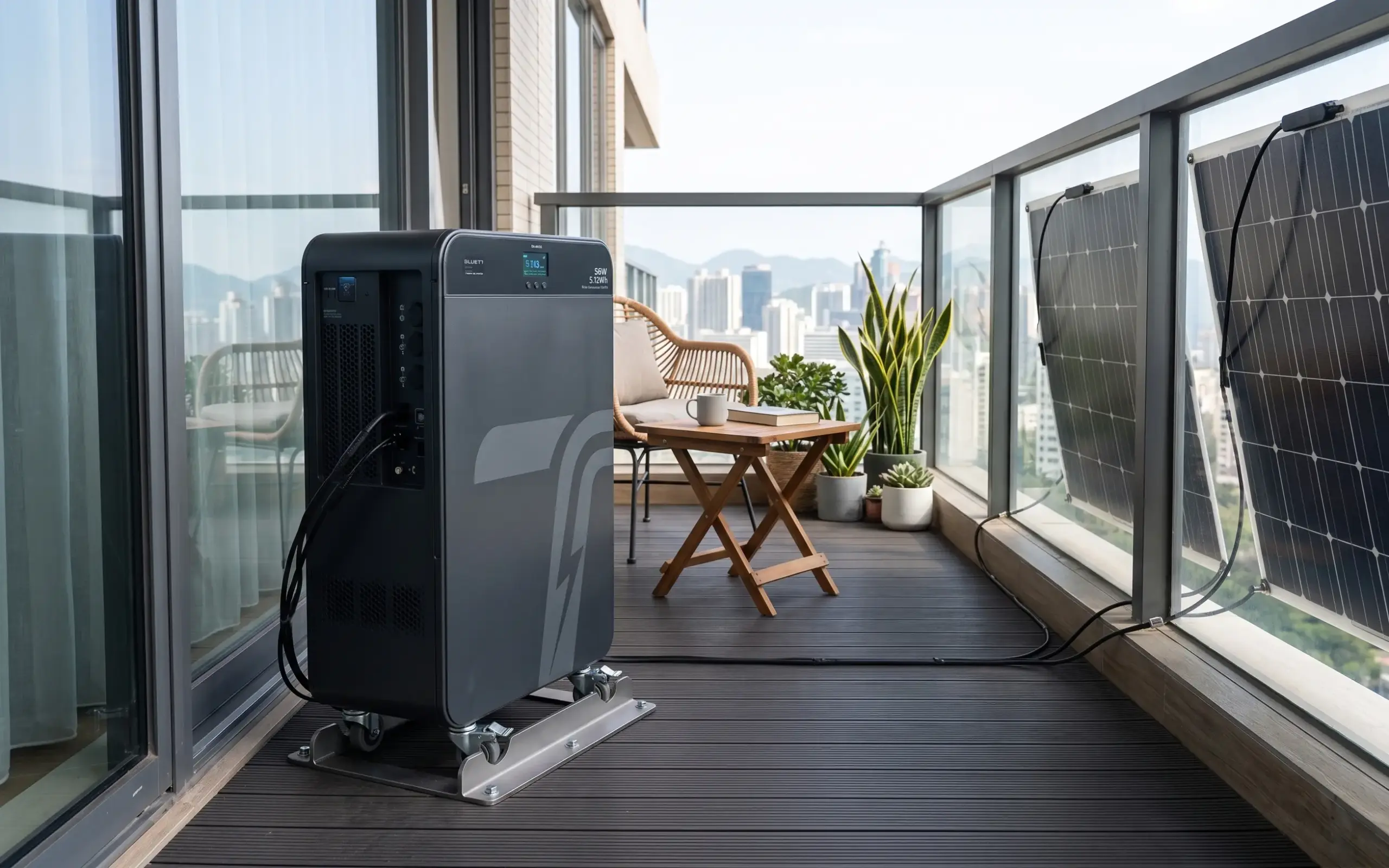
Expect about 4.0 to 4.5kWh of practical AC energy when the system reserves part of the pack and operates at around 90% round-trip efficiency. A battery rated for 0 deg C to 50 deg C discharge may still need derating in direct summer sun. Choose an enclosure with a suitable outdoor rating, such as IP54 or higher, but remember that an IP rating does not protect equipment from heat accumulation, flooding, or salt air.
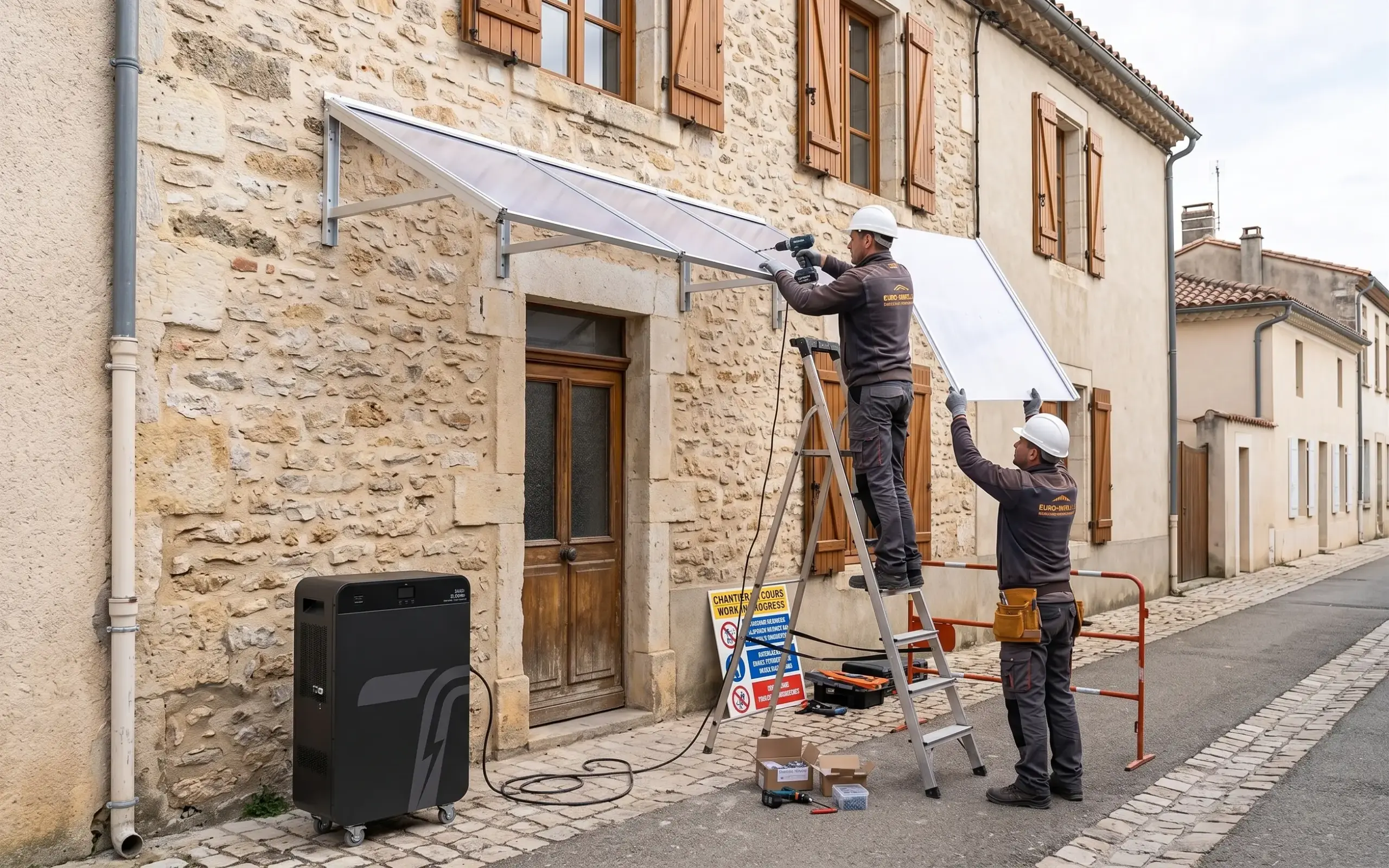
Load, not floor area, decides first. Have an engineer or building professional confirm the balcony’s allowable load. Never anchor a battery to a lightweight railing or place it where a falling unit could injure people below.
Keep ventilation paths clear, provide a weatherproof roof or cabinet when the product requires one, and leave the service clearances stated in the installation manual.
When an OEM or ODM Design Makes Sense
For distributors and installers serving apartment projects, a standard indoor battery is rarely enough. An cURL Too many subrequests by single Worker invocation. To configure this limit, refer to https://developers.cloudflare.com/workers/wrangler/configuration/#limits can adapt the enclosure, mounting rail, connector position, and communication interface for a restricted balcony footprint. Common requests include CAN or RS485 communication with a selected inverter, firmware limits for a 2kW or 3kW output, and a local-language label set.
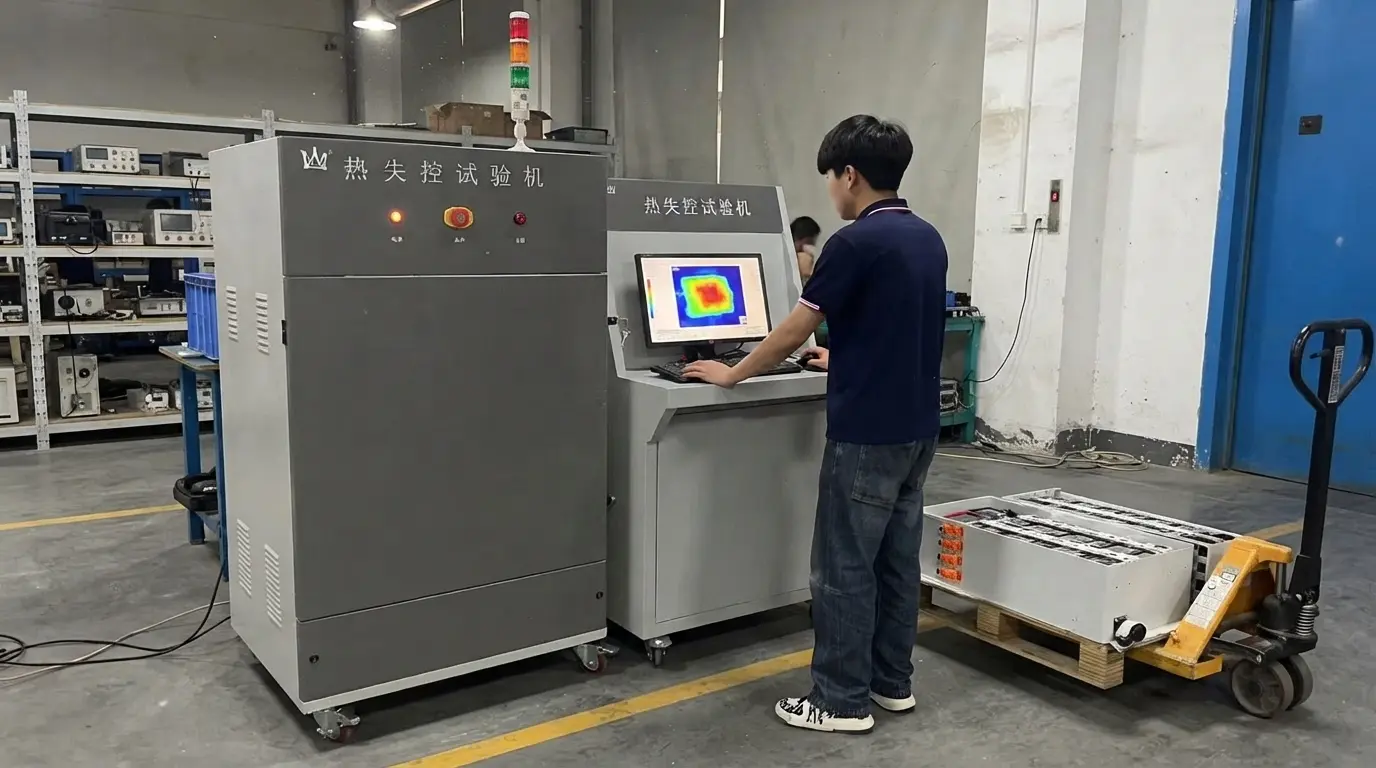
Ask for the UN38.3 test summary, IEC or regional safety documentation, ingress-protection test basis, and a clear sample lead time before placing a volume order. A supplier should also state whether its cycle-life figure, such as 6,000 cycles at 0.5C and 25 deg C to 80% depth of discharge, applies to the cells only or to the complete system. These details reduce installation surprises more effectively than a larger nominal capacity.
Balcony Configuration Decision Matrix
| Konfigurasie | Typical battery mass | Practical use | Balcony suitability |
|---|---|---|---|
| 2kWh portable LFP unit | 20–30kg | Small loads and short backup | Easier to move, but often limited in permanent outdoor protection |
| 5kWh 51.2V LFP system | 50–65kg | Refrigerator, lights, network equipment, and scheduled load shifting | Possible only after structural, electrical, and building approval |
| 10kWh modular LFP system | 100–130kg | Longer backup and larger daily loads | Usually unsuitable for a standard apartment balcony without a verified load design |
Mass excludes some system hardware; confirm the shipped configuration.
Vier algemene valkuiles
Treating the balcony as an indoor room
Rain, condensation, UV exposure, and trapped heat shorten battery life. Use the manufacturer’s allowed temperature and installation orientation, not a generic plastic cover.
Ignoring building approval
A battery may be legal from an electrical perspective and still violate lease, condominium, fire, or facade rules. Get written approval before delivery.
Connecting through an ordinary socket
A 5kWh battery needs a properly protected inverter circuit, isolation, grounding, and anti-islanding protection where it connects to the grid. Never improvise a back-feed connection.
Buying by capacity alone
Check continuous and peak power, usable capacity, BMS current limits, communication compatibility, warranty temperature range, and replacement access. A 5kWh pack with a 1kW inverter cannot deliver the same service as one paired with a 3kW inverter.
Gereelde Vrae
Can a 5kWh battery run an apartment during an outage?
It can support essential circuits rather than a whole apartment. At a 500W average load, 4kWh of usable AC energy lasts about eight hours. Induction cookers, electric heaters, and air conditioners can reduce that time sharply.
Does the battery need to stay outside?
No. If the apartment has a compliant utility room with suitable temperature, clearance, fire separation, and ventilation, an indoor location is often easier to approve and maintain. Follow the battery’s installation manual and local fire code.
Can the battery charge from balcony solar panels?
Yes, if the microinverter, charge controller, battery, and protection devices are designed as one compatible system. Confirm the permitted solar export and electrical connection rules for the building before installation.